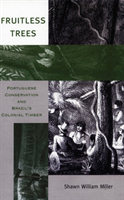
Fruitless Trees

Fruitless Trees

AngličtinaPevná väzba
Miller Shawn William
Stanford University Press
EAN: 9780804733960
Na objednávku
Predpokladané dodanie v piatok, 7. augusta 2026
74,14 €
ks
Chcete tento titul ešte dnes?
kníhkupectvo Megabooks Banská Bystrica
nie je dostupné
kníhkupectvo Megabooks Bratislava
nie je dostupné
kníhkupectvo Megabooks Košice
nie je dostupné

Podrobné informácie

For the most part, Brazil's forests were not harvested, but annihilated, and relatively little was extracted for the benefit of Brazilians, a tragedy perhaps worse than deforestation alone. Fruitless Trees aims to make sense of what at first glance appears to be the senseless destruction of Brazil's incomparable timber.

The forests have always been Brazil's most striking natural resource, and the Portuguese colonists anticipated enormous returns from its harvest, since Brazilian timber was more abundant and superior in quality to anything known in Europe, North America, or even Portugal's East Indian possessions. This work investigates the relationship between Portugal's colonial forest policies and the successes of the colonial venture, showing how forest law shaped the fortunes of the timber sector and promoted or obstructed colonial development. Timber was the steel, oil, coal, and plastic of the early modern period, and the effectiveness of its extraction affected nearly every branch of the colonial economy.

Challenging previous scholarship that simply ascribed the destruction of Brazil's remarkable forests to the Europeans' voracious greed and inherent hostility to the forest, the author argues that we must delineate the extent to which tropical timber was put to advantageous ends, and explore precisely why so large a proportion of Brazil's timber was incinerated rather than converted to colonial wealth.

Although Brazil exported substantial quantities of timber to Europe, the total amount fell far below expectations. The author attributes this in part to several ecological and geographical factors including the lack of common stands, the preponderance of timbers too dense to be floated inexpensively downstream, and the dearth of safe ports and navigable rivers. But the most significant factor in timber's unexpectedly poor showing was the Crown's effort from 1652 to monopolize Brazil's best timbers. The Portuguese king's declaration that Brazil's best timbers belonged to him exclusively resulted in vast tracts of timber being resentfully set afire by Brazilians who had no incentive to harvest them.

EAN 9780804733960
ISBN 0804733961
Typ produktu Pevná väzba
Vydavateľ Stanford University Press
Dátum vydania 1. apríla 2000
Stránky 344
Jazyk English
Rozmery 229 x 152
Krajina United States
Autori Miller Shawn William
Ilustrácie 8 illustrations, 15 tables
Informácie o výrobcovi
Kontaktné informácie výrobcu momentálne nie sú dostupné online, na náprave intenzívne pracujeme. Ak informáciu potrebujete, napíšte nám na [email protected], radi vám ju poskytneme.